Science and Innovation Park series, with The MoSAIC


Showing "ALL" event dates "ALL" locations Suitable for "ALL" (21)
This event is now fully booked!
This event is now fully booked!
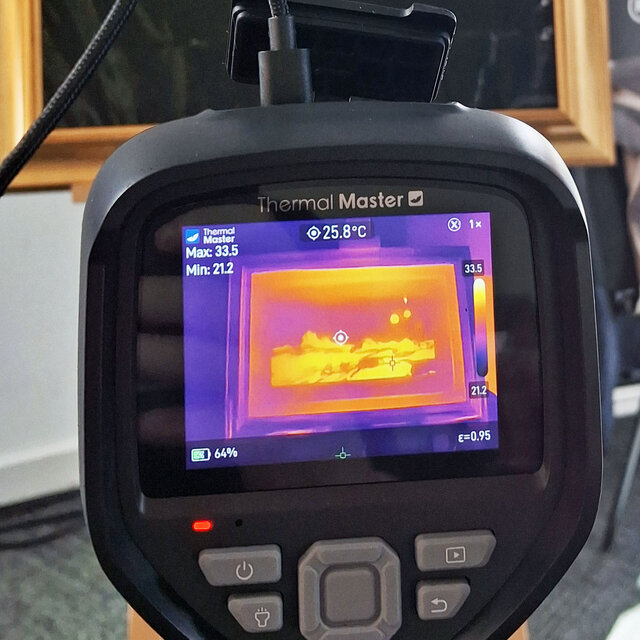
In this continuation of The MoSAIC's Art of Astrophysics workshop series, we'll explore the hidden world of infrared art with artist Gaz Lawrence. With the James Webb Space Telescope, infrared light is helping us discover new planets outside of our solar system, now we can use it to imagine what their landscapes might be like too.
Learn about the connection between heat and light, question how Gaz’s paintings are revealed only through thermal imaging, experiment with materials to create your own exoplanet-inspired landscapes, and see your work come alive through an infrared camera.
This workshop directly links to The MoSAIC’s pop-up exhibition at The Festival of Tomorrow 2026 which will be open in Swindon Designer Outlet between 14th – 21st February. With free entry, it is the perfect way for young people to extend their learning beyond the classroom.
Notes for Teachers:
Key Topics and Themes Covered
1. Light Beyond Human Vision
• The electromagnetic spectrum, with a focus on visible light and infrared.
• How infrared light differs from visible light.
• Why humans cannot see infrared, and how technology allows us to detect it.
2. Heat and Light
• The relationship between heat and infrared radiation and it’s discovery.
• How all objects emit heat energy.
• How thermal imaging cameras translate heat into visual images.
3. Infrared in Astrophysics
• How the James Webb Space Telescope uses infrared light.
• Why infrared is useful for observing distant stars, galaxies, and exoplanets.
• How astronomers infer information about planets they cannot directly see.
4. Art and Scientific Imaging
• How artists use scientific tools and processes as creative methods.
• Discussion of Gaz Lawrence’s paintings and why they are only revealed through thermal imaging.
• Questioning what an “image” is and how meaning changes depending on how it is revealed.
5. Imagination
• Using scientific data as a prompt for imaginative interpretation.
• Creating speculative landscapes inspired by exoplanets.
• Understanding that science often involves interpretation, modelling, and imagination.
Skills Nurtured
• Curiosity
• Observational and analytical thinking
• Creative problem-solving
• Understanding of scientific imaging technologies
• Prediction
• Experimentation
• Collaboration
• Cross-disciplinary thinking between art and science
Preparation for Teachers (Optional)
• To support learning before the session, teachers may wish to:
Introduce how light behaves e.g. reflection, absorption etc.
• Introduce the concept of the electromagnetic spectrum.
• Discuss how telescopes work and why different types of light are useful in astronomy.
• Show examples of infrared images (e.g. space images, thermal cameras).
• Encourage students to think about the limits of human senses and how technology extends them.
No specialist materials or prior practical work are required.
Suggested Follow-Up Activities
In Science
• Investigate the electromagnetic spectrum beyond visible light in more detail.
• Research how different telescopes (Hubble, James Webb, radio telescopes) observe the universe.
• Explore real-world uses of infrared technology (medicine, wildlife monitoring, climate science).
In Art
• Create artworks that reveal hidden layers (e.g. using heat-sensitive materials, overlays, or UV-reactive media).
• Discuss how artists use data, technology, and scientific processes.
• Explore speculative or science-fiction landscapes informed by real scientific concepts.
Cross-Curricular
• Write a creative piece of writing or poem describing life on an exoplanet based on scientific data.
• Debate how technology shapes what we consider “real” or “true” images.
Mon 2nd, Tues 3rd, Weds 4th, Mon 9th, Tues 10th & Weds 11th February only
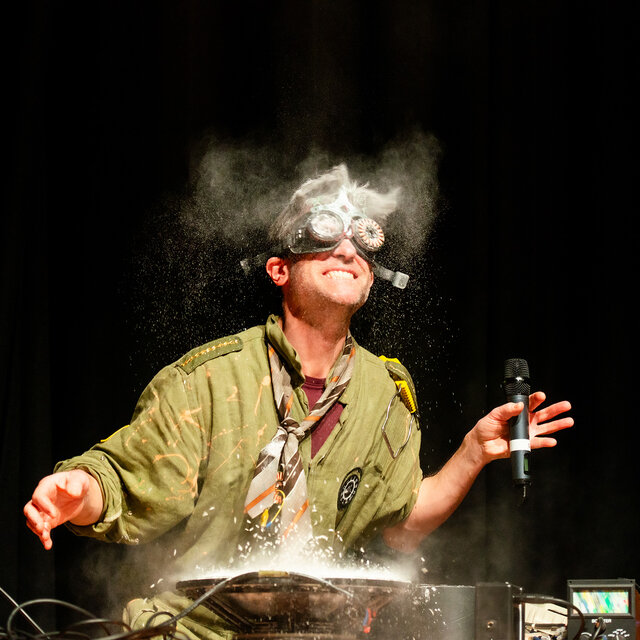
What is this mysterious thing called Bass and why does it make us feel so groovy? We will find out with Booming bass vibrations, flying lentils, fake magic and dancing Oobleck monsters!
We will find out where electrical things go to die, and how to zombify them with some backwards engineering; what happens when you hack a hard drive motor and wire it up the wrong way? Some seriously deep bass is what happens! Hardware hacking is fun and easy, but we must first learn how to be safe with electricity.
Maybe you can help with the infamous Noisy Toys Nose Test, where we learn about circuits by switching on our noses. At the end, everyone can try the 'Bass Buzz' when you will feel 1000 watts of bass power through your fingers.
Excitingly loud and chaotic science & noise!
Versions of the show can be for KS1 & KS2 separately or together. Some content will be too advanced for KS1, but there is other content more suited to KS1. The show is fast-paced, visual and with funny sounds, so it’s OK if some things are not fully understood.
30 – 45 minute show (as preferred by the school) followed by 10-15 minutes Bass Buzz activity.
Notes for Teachers:
Main topics covered:
Sound: Sound waves, vibrations, pitch/frequency, volume/amplitude, microphones
Circuits: electrical safety, switches, conductors & insulators
Electromagnetism: we only touch on this, as used in speakers, motors & generators
e-waste: recycling, upcycling, hardware hacking & DIY Making
Versions of the show can be for KS1 & KS2 separately or together. Some content will be too advanced for KS1, but there is other content more suited to KS1. The show is fast-paced, visual and with funny sounds, so it’s OK if some things are not fully understood.
30 – 45 minute show (as preferred by the school) followed by 10-15 minutes Bass Buzz activity.
Bass Buzz: at the end the audience will take it in turns to put their hands into an 18” bass speaker driver and experience the vibrations through their fingers, which is quite intense. This is best done one row at a time (everyone else remaining seated) standing up and queueing , then passing the front table in groups of 5 at a time, just for a few seconds to experience the Buzz. They will also get a close-up look at some dancing Oobleck. They can then file out of the show area.
Shepherding by the staff is essential for this to run smoothly so that the performer can focus on the activity. Teachers are also encouraged to participate.
This sensory experience is valuable for reinforcing understanding of the workings of the speaker, and or sound vibrations as well as the frequency/pitch relationship. Also it feels very weird!
This event is now fully booked!
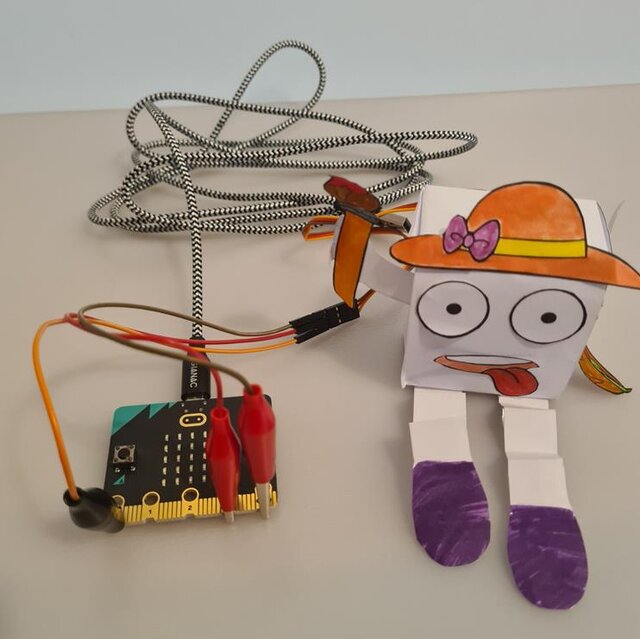
Join the UK Electronics Skills Foundation for a fun, engaging introduction to Electronics for UKS2. We’ll get your class talking in a live online introductory session and then provide you with physical components and digital resources for your pupils to work in small groups to create working ‘bots’. They’ll design, code, build and test their ‘bots’ which will move in response to noise, before communicating their work.
With comprehensive support for teachers throughout, this programme has been created by qualified teachers and is designed to build children’s confidence, skills and vocabulary through a positive, hands-on and cross-curricular experience of Electronics.
Optional teachers sessions:
Monday, 26th January 2-3pm
Tuesday, 27th January 4-5pm
Book your Teachers' Sessions slot here
'Your students will need access to Micro:bits and a laptop or tablet to code. If your school does not have Micro:bits, please contact us on education@ukesf.org before booking as we may be able to help. '
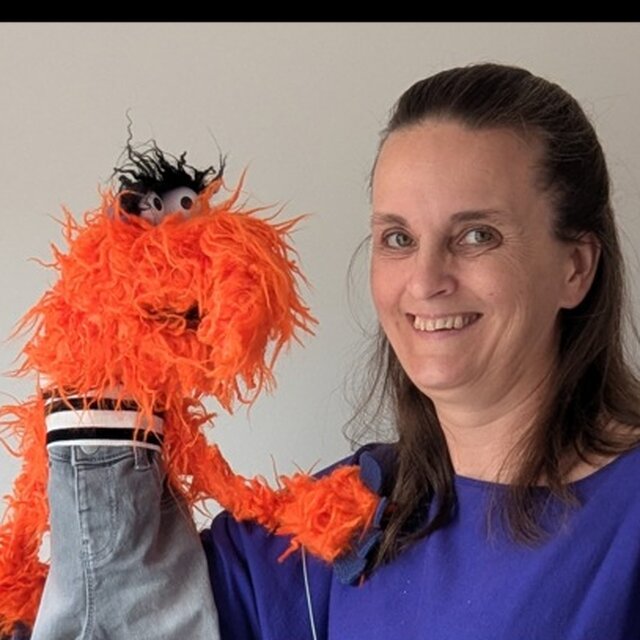
Dr Sarah Bearchell found Oso, a small orange creature, living in her shed. Can you use the clues to help discover where he lives?
This Whole School Challenge starts with a teacher-led game of Odd One Out, to discover differences and similarities between Oso and some well-known creatures. We then come together for an online Launch Assembly, to discuss what you found and how that gives us clues to Oso’s origins.
Children are then challenged to design and create their own alien for a specific habitat – using their creativity and imagination, based on science!
Photos of these Imaginary Aliens will be shared in an online Celebration Assembly.
The challenge is differentiated by age, so your whole school can join in. Teacher support notes and slides provided.
What's involved:
Part 1: Monday 2 February - Join the live launch assembly on Zoom for your introduction to the challenge - approx 30 minutes duration (this short session will also be recorded and available to watch on-demand, if you can't make the live session)
Part 2: In class activity, whenever you like.
The activities are sorted by age, but you know your class best, so should choose the activity which suits your students the best.
Full activity notes and a copy of the introductory slides will be provided in advance of the sessions.
***Please read through the whole instruction sheet well in advance of the session as you might need to do some shopping or raid another classroom!*** Materials and costs are kept to a minimum.
You should complete your own risk assessment to consider how the activity will work in your own classroom.
Please take photographs and record data on results then send them to the Festival of Tomorrow team for inclusion in the celebration assembly.
Upload your class's results by end of day on Tuesday 10 February for them to be featured in our live online finale celebration.
Part 3: Don't forget to also register for the Thursday 12 February Live online celebration!
Join the celebration assembly on Zoom to see everyone's best photos and results -and share learning from the week.
Dr Sarah Bearchell found Oso, a small orange creature, living in her shed. Can you use the clues to help discover where he lives?
This Whole School Challenge starts with a teacher-led game of Odd One Out, to discover differences and similarities between Oso and some well-known creatures. We then come together for an online Launch Assembly, to discuss what you found and how that gives us clues to Oso’s origins.
Children are then challenged to design and create their own alien for a specific habitat – using their creativity and imagination, based on science!
Photos of these Imaginary Aliens will be shared in an online Celebration Assembly.
The challenge is differentiated by age, so your whole school can join in. Teacher support notes and slides provided.
What's involved:
Part 1: Monday 2 February - Join the live launch assembly on Zoom for your introduction to the challenge - approx 30 minutes duration (this short session will also be recorded and available to watch on-demand, if you can't make the live session)
Part 2: In class activity, whenever you like.
The activities are sorted by age, but you know your class best, so should choose the activity which suits your students the best.
Full activity notes and a copy of the introductory slides will be provided in advance of the sessions.
***Please read through the whole instruction sheet well in advance of the session as you might need to do some shopping or raid another classroom!*** Materials and costs are kept to a minimum.
You should complete your own risk assessment to consider how the activity will work in your own classroom.
Please take photographs and record data on results then send them to the Festival of Tomorrow team for inclusion in the celebration assembly.
Upload your class's results by end of day on Tuesday 10 February for them to be featured in our live online finale celebration.
Part 3: Don't forget to also register for the Thursday 12 February Live online celebration!
Join the celebration assembly on Zoom to see everyone's best photos and results -and share learning from the week.
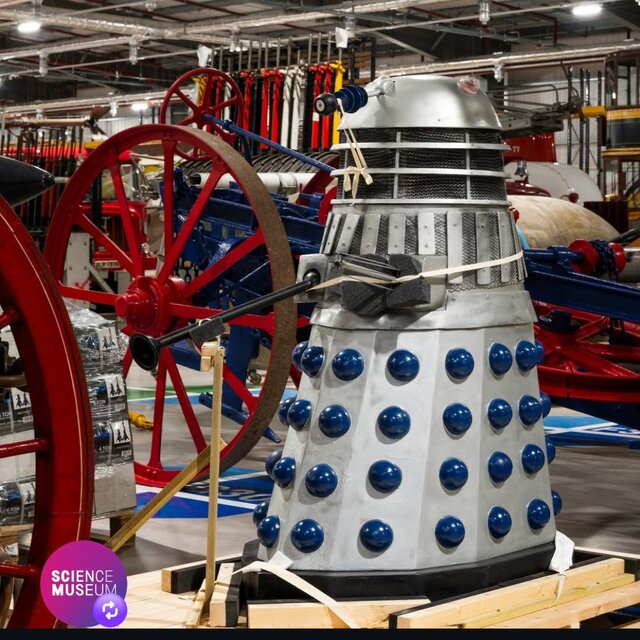
There will be different KS2 science topics this show will touch upon, such as electricity, motion and magnets. I will also be cross linking this to history and will talk about what evidence we collect to tell history (such as items in a collection).
This will lead nicely onto the end of the show – the students will be asked what items they would donate to a museum, whether this is a personal item and/or a piece of science/technology they feel is important to put in a museum. After this visit, this can be a classroom activity where students can draw what they would like to see in a museum, and you could collect this altogether to display what your school’s museum would look like!
Another follow-on classroom activity can involve discussing the science and innovation in different historical contexts and can be linked to history you are teaching at the time.
Mon 2nd,Tues 3rd, Fri 6th, Mon 9th, Tues 11th, Fri 13th February
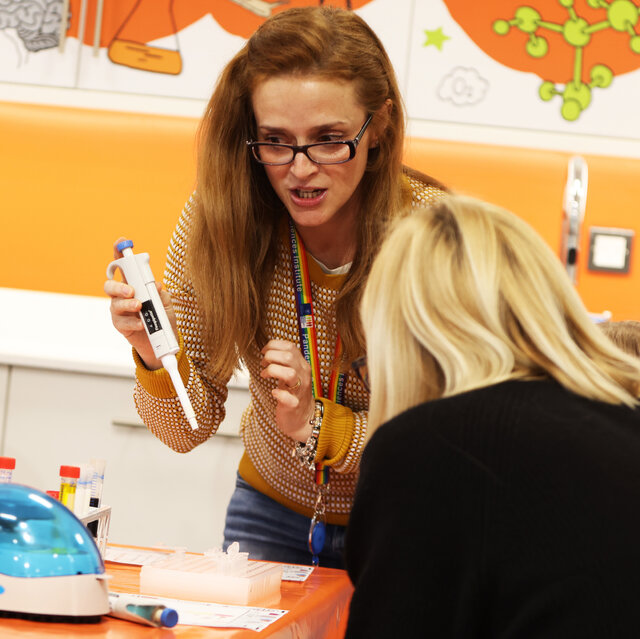
Vaccines are arguably one of the most important and cost-effective healthcare tools for protecting lives against infectious disease. We have effective vaccines against more than 20 of the most important global diseases, but why don’t we have vaccines for every disease and why aren’t they all 100% effective. In this workshop students will learn how scientists design vaccines and the challenges associated with this process, by having a go at designing their own vaccines step by step. Students will learn original thinking and problem-solving skills through team-based activities, and get a chance to run hands on experiments with real laboratory equipment to develop technical and dexterity-based skills in a fun and slightly messy way.
Tues 3rd, Weds 4th, Thurs 6th,Tues 10th, Weds 11th, Thurs 12th, Fri 13th February
Notes for Teachers:
Key Topics Covered: Why are vaccines important. What are the different types of vaccine. How we deliver vaccines in different ways. How do we test that vaccines work.
Key Skills Learnt: Technical skills, Dexterity skills, Problem solving, Original thinking. This is the session as it stands in its longest format. Some elements may be adjusted based on time constraints and ages of students.
Introduction: What causes disease and why do we get outbreaks? What is a vaccine and why do we need them?
Task 1: Students are presented with 3 fictional disease with different symptoms. In groups they must discuss which is their priority for developing a vaccine against.
Task 2: Students are presented 3 different types of vaccines that scientists can make along with their pros and cons. In groups they must discuss which is the best fit for their disease of choice.
Task 3: Students are presented with different ways we can deliver a vaccine to the body along with pros and cons. In groups they must discuss which is the best fit for their disease of choice.
Task 4: Hands on. Students will get a chance to explore vaccine delivery using blunt needles to ‘vaccinate’ sponges with water and compare this to other methods. This has been risk assessed and is safe however students will be given safety briefing and a safety demonstration. We will also reassure students who may scared of needles that these are not real ones.
Task 5: Hands on. Testing vaccines. Groups will run an experiment to calculate how many might be protected by their vaccine. They will use scientific pipettes to transfer volumes of liquid to a plate and note the change of colour. The experiment uses red cabbage indicator in acid (vinegar) and alkali (bicarb soda) solutions achieve this and represents more complicated colour change reactions used by scientists to measure the human immune system. Students will use basic math to calculate a % at the end (help for younger students)
Task 6: Student can name their vaccines (with often hilarious results).

This event is now fully booked!
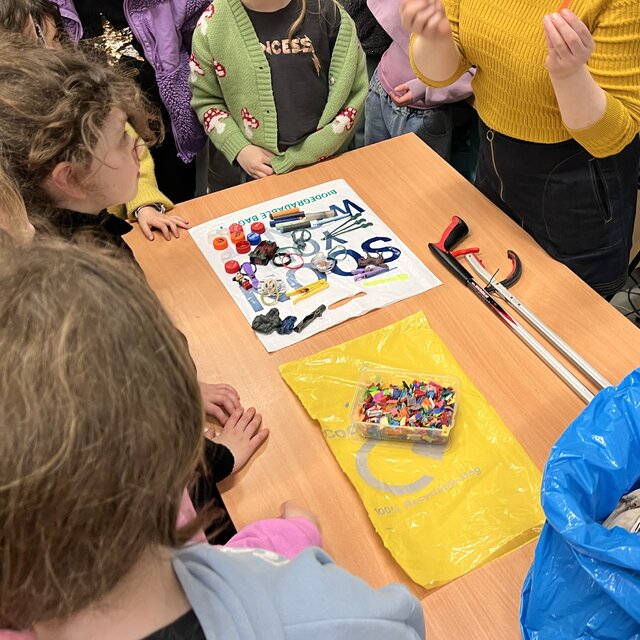
This hands-on creative workshop invites children aged 9-11 (Key Stage 2) to dive into the world of environmental storytelling through the immersive lens of board game design.
Guided by two environmental researchers, children will explore game design mechanics, encounter exciting characters, and tackle real-world environmental themes, all while learning the basics of design thinking in a playful and accessible way.
Using character cards featuring mermaids, pirates and even giants, children will dream up how environmental issues affect these characters and use design thinking to tackle these issues in creative and extraordinary ways. Children won’t just play games, they’ll create them, using their ideas to build unique board games that reflect their understanding of the environmental topic while tapping into the power of imagination.
This activity is part of Future Island-Island, one of four UKRI-funded GTE initiatives, and aims to connect young minds with research in a fun and meaningful way.
Notes for Teachers:
During this workshop, children will be introduced to key environmental themes through laminated Topic cards that relate to ocean health (marine/beach plastic pollution), supporting animal habitats, powerful pollinators, land pollution and food waste.
Alongside these Topic cards, children will also be introduced to characters called the Extraordinaires who are mermaids, fairies, pirates, wizards and giants. Design-thinking comes into play when these imaginative story-like characters are introduced in the session.
Children will read and choose which Topic card’s problem they want to “solve” as well as choosing an Extraordinaire character to base their game on. Afterwards children will be given worksheet templates where they have complete freedom to design their board game, create their own rules and tokens in order to play their game.
At the end of the session, children are invited to showcase their game designs, the rules and how to play. They can then improve their games post-workshop, at home, or with their friends, either by creating proper figurines, constructing a bigger and more durable board, or adapting their rules, etc.
We hope children are then able to understand their importance within the natural and built environment all through the power of imagination and play.
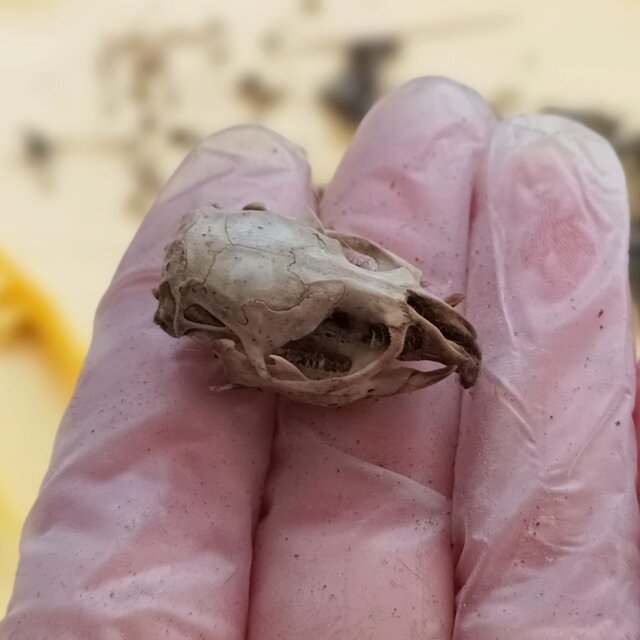
Owl-some Adventures in Eating!
Get ready for a wild journey into the weird and wonderful ways animals eat! In this lively online class, we explore amazing adaptations — from snakes unhinging their jaws to swallowing meals whole, to starfish turning their stomachs inside-out, to owls gulping down prey and later spitting out perfectly packaged pellets. Children discover how diets link to habitats, food chains and survival, all beautifully tied to the KS2 Science curriculum on living things, nutrition, and adaptation.
Then it’s time for the big moment… an owl pellet dissection! Pupils can dissect pellets purchased from us using the special link here:
…to follow along with the presenter, or simply watch as we uncover tiny bones, fur, and clues about an owl’s last meal.
It’s hands-on, curiosity-fueling science that brings learning to life.
What secrets will we discover inside?
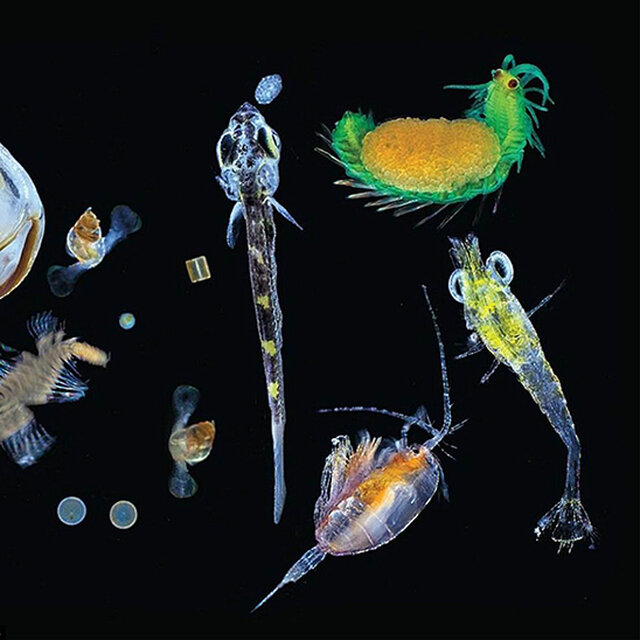
Sea Soup: Why You Should Care About Plankton is an interactive online session for KS2 pupils exploring the tiny organisms that quietly run our planet. Pupils are introduced to the extraordinary diversity of plankton (microscopic plants and animals that underpin our ocean) and discover why these microscopic organisms re crucial for life on Earth.
The session is led by Dr Russell Arnott, marine scientist and founder of Incredible Oceans CIC, and draws directly on real marine research, including Russell’s own research at the intersection of physics, climate and marine biology. More complex scientific ideas are explained clearly with pupils encouraged to use new scientific vocabulary and ask questions.
The workshop links to KS2 Science, Geography and Working Scientifically, while also introducing pupils to how science is used to understand environmental change. Designed to be lively, thought-provoking and empowering, the session shows why caring about plankton means caring about life on Earth.

A Whale of a Time: The Coolest Whales and Dolphins is an interactive online session for KS1 pupils that explores some of the ocean’s most extraordinary and charismatic animals. Children will discover the amazing world of whales and dolphins as we explore how they communicate, find food and survive in the ocean, and why they are so important for our planet.
The session is led by Dr Russell Arnott, marine scientist, former teacher, and founder of Incredible Oceans CIC; an organisation connects people with ocean science through creative, engaging storytelling.
The workshop links directly to the KS1 Science National Curriculum, including:
• Animals, including humans
• Living things and their habitats
• Working scientifically (asking questions, observing, describing)
Designed to be fun and interactive, this session supports science learning with curiosity, questioning and awe while inspiring a lifelong interest in the natural world.
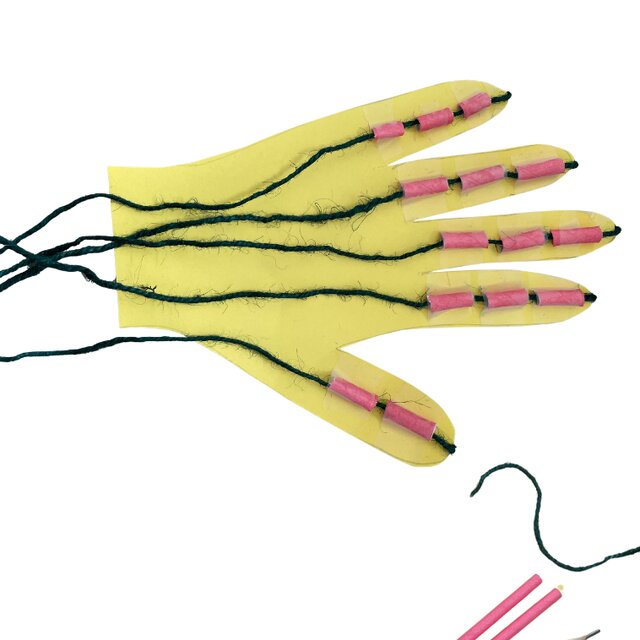
Get ready for Your Future Body – build a robot hand, an interactive livestream where pupils become bone detectives and build their very own working model hand!
In this informative and exciting session, children dive into the incredible world of the human skeleton, discovering how bones protect us, support us, and help us move. They’ll learn why joints bend, how fingers grip, and what makes the skeleton such an amazing living structure.
The highlight of the workshop is a hands-on engineering challenge: pupils will create a paper-and-straw hand grabber to explore function and movement, revealing how bones and tendons work together every time we pick something up. With clear, step-by-step guidance and simple materials, every child can build, test and improve their model.
Packed with discovery, problem-solving and science in action, Your Future Body – Build a Robot Hand brings learning to life and gets pupils thinking like real scientists and engineers. Perfect for KS2 classrooms looking for a memorable STEM experience!
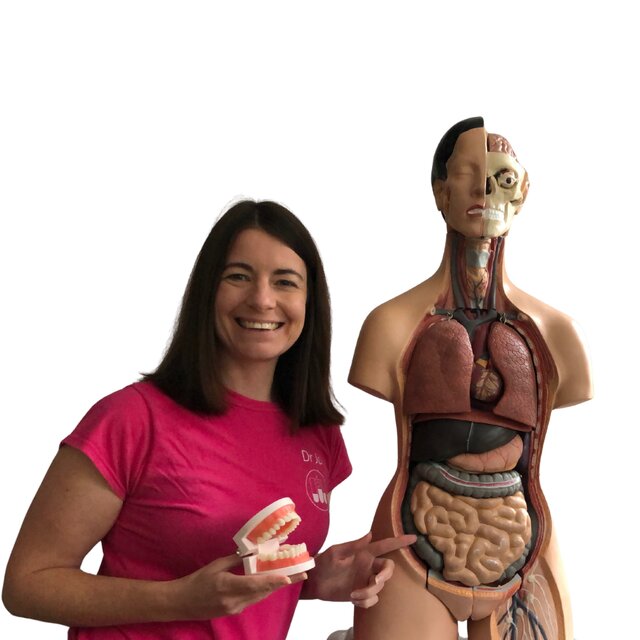
Join Dr Jo for Brilliant Bodies Live! — an action-packed, investigative science workshop where children become real young scientists and explore the incredible machine that is… themselves!
In this interactive livestream, pupils will discover how their muscles help them bend and stretch; test their eyes with surprising optical illusions; and become smell detectives, using their super noses to identify mystery scents.
Children will feel their heartbeat, explore how their lungs push air with a fun blowing challenge, and learn to name and identify key body parts using hands-on investigation.
Brilliant Bodies Live is fully interactive, exciting, and designed for KS1 learners - perfect for sparking curiosity, boosting scientific thinking, and helping children understand how amazing their bodies really are. Get ready for a session packed with discovery and wow moments!
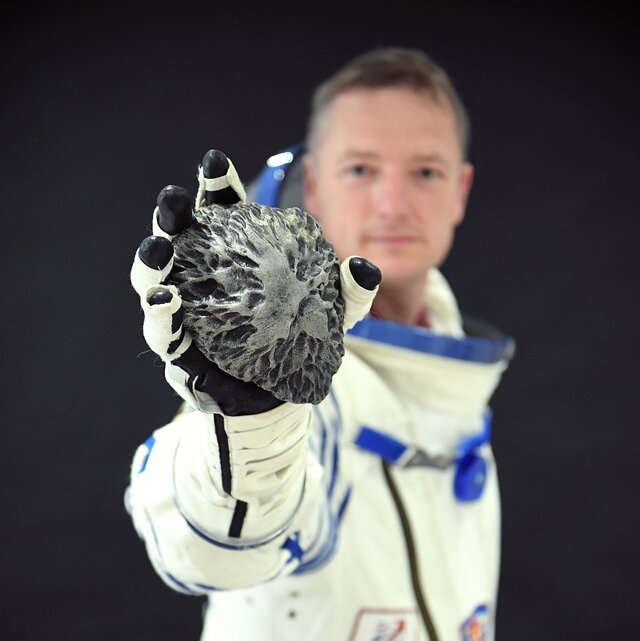
In space, no one can hear you scream…
…especially if you aren’t wearing a spacesuit and your capsule springs a leak, or is hit by a meteor, or burns up on re-entry, or any of the other terrible mishaps that could really put a dent in your plans for a weekend away on the moon!
Find out how rockets get you into space; how spacesuits keep you alive and how you can survive re-entry. Along the way avoid some of the other traps, disasters and toileting errors that the cosmos has waiting for you.
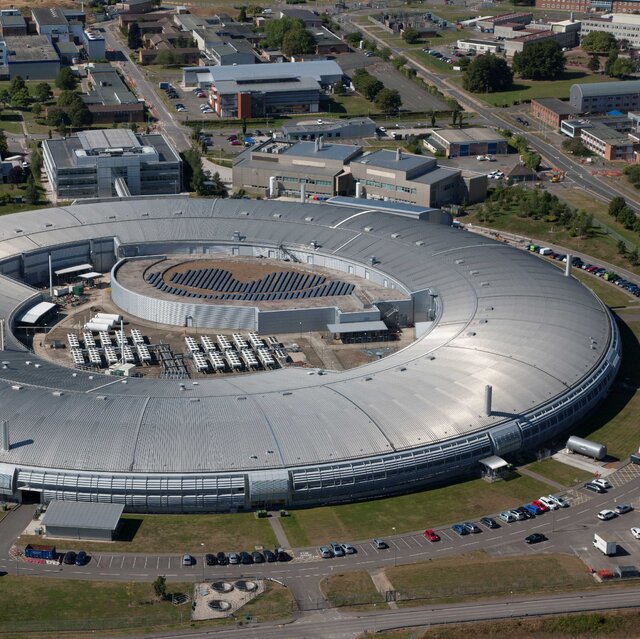
Diamond Light Source is the UK’s national synchrotron, a type of particle accelerator, serving scientists and researchers from around the world. The machine generates extremely bright light that is directed into laboratories known as beamlines. Scientists use the light to find solutions to humanity’s most critical challenges, from health, food security and biotechnology to energy, climate change and advanced materials.
Join staff from Diamond for a live virtual treasure hunt around our facility to find out more about how we work and the science that is carried out here. You will need to solve clues to direct staff to find your way to the treasure, avoiding any red herrings!
Relevant topics that may be covered include magnetism, light, materials and space.
Diamond Light Source is the UK’s national synchrotron, a type of particle accelerator, serving scientists and researchers from around the world. The machine generates extremely bright light that is directed into laboratories known as beamlines. Scientists use the light to find solutions to humanity’s most critical challenges, from health, food security and biotechnology to energy, climate change and advanced materials.
Join staff from Diamond for a live virtual treasure hunt around our facility to find out more about how we work and the science that is carried out here. You will need to solve clues to direct staff to find your way to the treasure, avoiding any red herrings!
Relevant topics that may be covered include magnetism, light, materials and space.
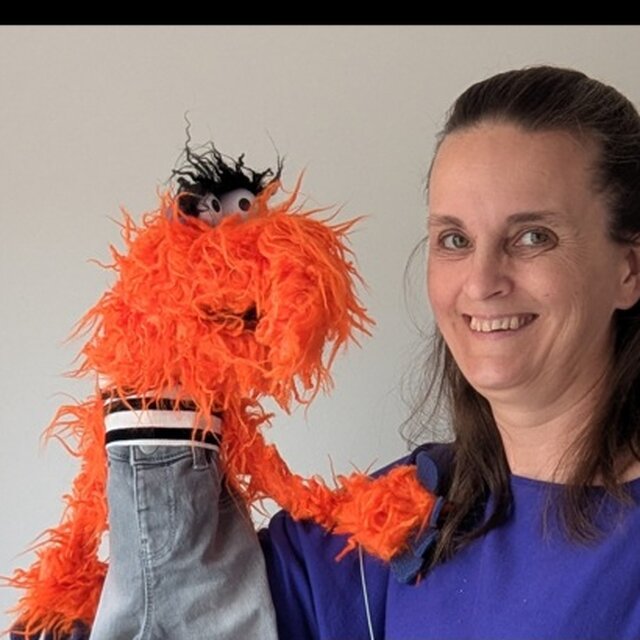
Join Dr Sarah Bearchell (and Oso!) for a special live online Assembly to share and celebrate everyone's work and creations.
Dr Sarah Bearchell found Oso, a small orange creature, living in her shed. Can you use the clues to help discover where he lives?
This Whole School Challenge starts with a teacher-led game of Odd One Out, to discover differences and similarities between Oso and some well-known creatures. We then come together for an online Launch Assembly, to discuss what you found and how that gives us clues to Oso’s origins.
Children are then challenged to design and create their own alien for a specific habitat – using their creativity and imagination, based on science!
Photos of these Imaginary Aliens will be shared in an online Celebration Assembly.
The challenge is differentiated by age, so your whole school can join in. Teacher support notes and slides provided.
Make sure you've also signed up for Part 1, according to Key Stage, the previous week!
With thanks to all of our partners, who support the whole festival.
Particular thanks to partners who have supported elements of the schools programme, helping to inspire the next generation of creatives, scientist and engineers!